
Show Notes
What happens when therapy has no way to say a goal is wrong?
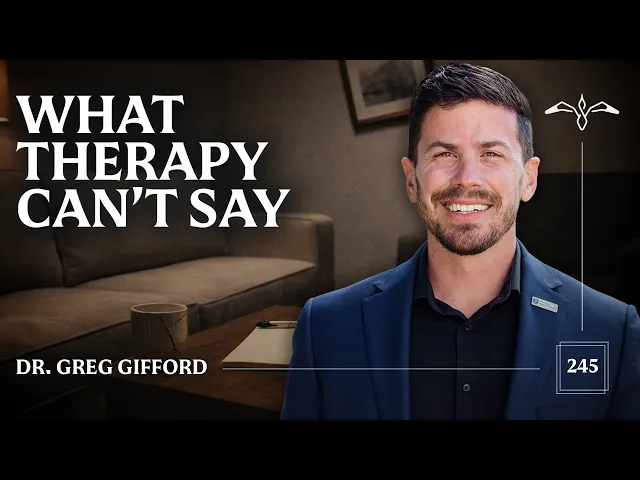
In this episode, Will Spencer is joined by Greg Gifford, a biblical counselor, professor, and former Army captain, to examine a foundational assumption of modern therapy: that the role of counseling is to help clients achieve their chosen goals—without any shared account of moral truth.
The conversation opens with a question that exposes the problem directly: What if a client’s goal is immoral, destructive, or sinful? If therapy has no framework for judgment, responsibility, or repentance, what exactly is it forming?
From there, the discussion moves into deeper territory: the difference between mind and brain, the rise of diagnosis-based identity, the authority of the DSM, and why Christians often absorb therapeutic categories without examining the worldview beneath them.
This is not an argument against care, compassion, or counseling. It is an argument for discernment—and for recovering a moral and biblical account of the inner life that modern therapy is structurally unable to provide.
In this episode
What modern therapy is structurally unable to say
Why goal-oriented counseling collapses without moral truth
The difference between mind and brain
How diagnosis reshapes identity
Trauma without fatalism or victimhood
The authority and limits of the DSM
Why Christians often absorb therapeutic categories uncritically
Psychedelics and the false promise of inner renewal
Responsibility, repentance, and real change
Guest's Links
Listen to Transformed on Fortis+ or wherever you get your podcasts:
https://fortisplus.org/tabs/listen/podcasts/34123
Buy “Lies My Therapist Told Me”: https://a.co/d/01NGgZk5
Check out the Fortis Institute YouTube channel:
https://www.youtube.com/@Fortis.Institute
Learn more about Transformed Biblical Counseling Centers:


